










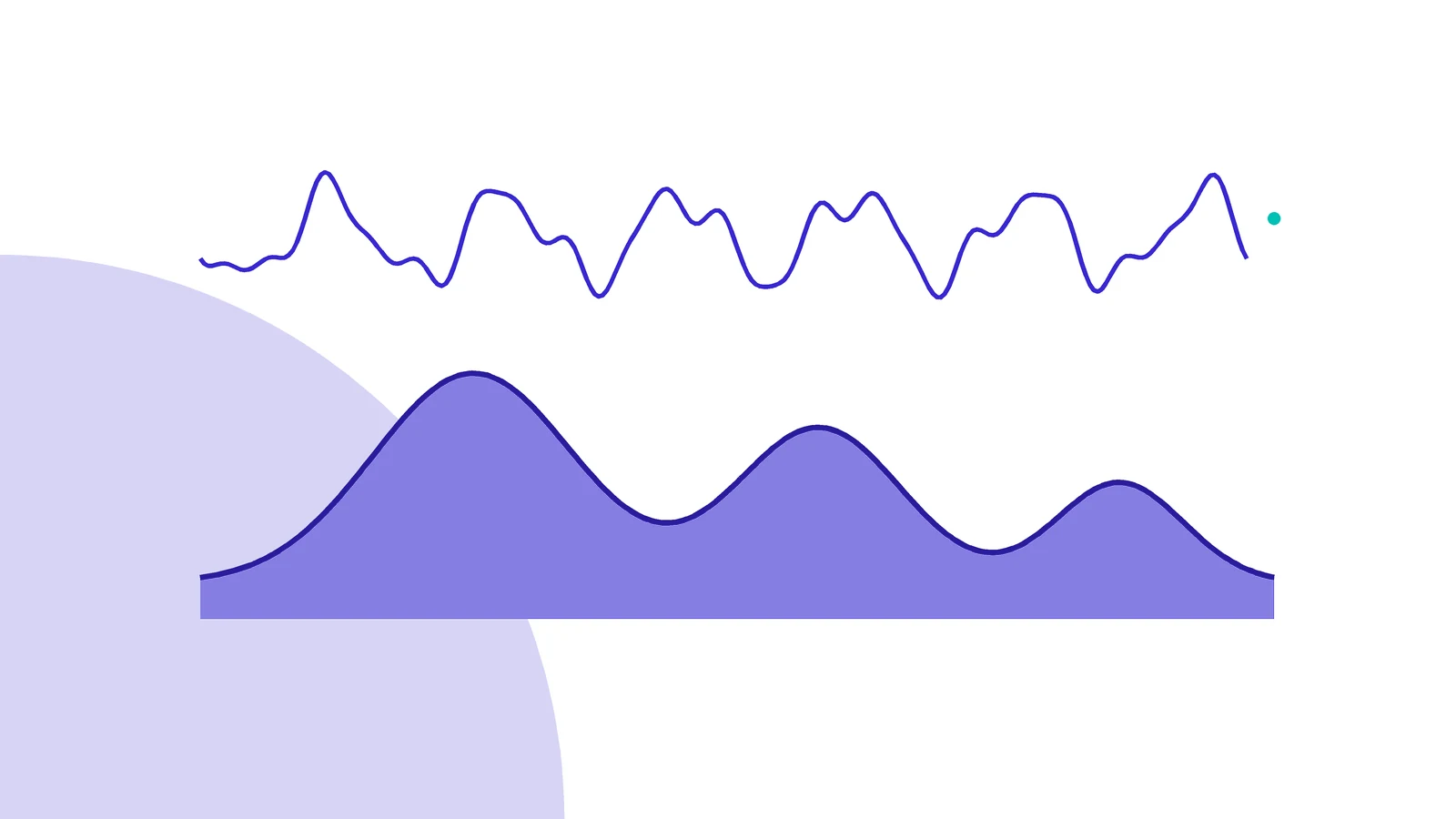
Why do two people singing exactly the same note sound so different? It isn’t magic, and it isn’t “just having a good voice”. It’s acoustics, explained by a model that’s been studied for over a century. It’s called source-filter theory, and once you get it, you never hear a voice the same way again.
CajaConcepto — Source × Filter = timbre
Every sung note is produced in two independent stages: a source that generates the sound, and a filter that shapes it. The timbre you hear is the result of multiplying one by the other.
The source: the guitar
The source is your vocal folds (also called vocal cords). Air rising from your lungs sets them vibrating, and that vibration produces a sound wave rich in harmonics: a fundamental tone accompanied by a whole train of frequencies that are exact multiples of it. It’s exactly what happens when you pluck a guitar string: it’s not just the note that sounds, it’s the note with its full retinue of harmonics — and that’s what gives the sound its body.
The filter: the trumpet
The filter is your vocal tract: the pharynx, the mouth, sometimes the nasal cavity. It’s a tube of changing shape with its own natural resonances, called formants, that amplify some of the source’s harmonics and dampen others. It’s the same principle by which a trumpet doesn’t come out of a player’s mouth as a simple lip buzz: the metal tube shapes that buzz into the instrument’s recognizable sound.
When you change vowel, you move the filter
When you change note, you change the source (the fundamental frequency goes up or down), but the filter, the shape of your vocal tract, doesn’t have to move with it. And when you change vowel (from “ah” to “oo”, say), the opposite happens: you keep the same note, the same source, but you completely change the shape of the filter. That’s why going up into the high notes often requires “readjusting” the mouth and throat. The source has risen in frequency, and if the filter stays put, it stops being aligned with it.
Why two voices on the same note sound different
The answer is already on the table: two people can share almost the same source (the same note, a similar fold closure) and sound completely different because their filters, the size and shape of their vocal tract, are different. That’s why you recognize someone by their voice even when they’re singing the same song as someone else: the source may be similar, but the filter is unique.
A model with over a century of history
Source-filter theory isn’t a new idea, and it isn’t exclusive to singing: it’s one of the most widely used models in speech and singing-voice acoustics, and has been for decades. Its strength is that it separates two things that, to the ear, seem like one: how your voice “sounds” actually depends on two distinct systems that can be trained separately. A singer can work on the efficiency of the source (fold closure, the airflow-to-sound ratio) and, independently, on the shape of the filter (where the tongue sits, how far the jaw opens, whether the larynx rises or lowers). They’re two separate levers for the same final result.
CajaPruébalo — A minute with your own voice
Sing a comfortable note and hold it. Without changing the note, slowly move from the vowel “ah” to “oo” and then to “ee”. Notice: the note (the source) doesn’t move, but the color of the sound changes completely. What you’re hearing change is your filter moving in real time.
Glosario
- Source — the origin of vocal sound: the vibration of the vocal folds.
- Filter — the vocal tract, which shapes the source’s sound with its resonances.
- Harmonic — each of the exact frequency multiples of the fundamental note that accompany it.
- Formant — a resonance of the vocal tract that reinforces certain frequencies.
- Timbre — the “color” of a sound, what lets us tell one voice apart from another even when singing the same note.
Keep reading
Want to see how your own source and filter behave across your whole range? Analyze your voice →